Saying “I do” used to be the limit of the bride’s official speaking role at a wedding. Not any more. A bride speech is increasingly common, and why not? Why shouldn’t you get to thank the important people in your life, show the guests some appreciation and, crucially, tell everyone about your gorgeous new husband (and poke a little affectionate fun at him while he sits there unable to answer back)? There is no good reason you shouldn’t. The only question is how to do it with style, and that is what this page is for.
I spend most of my time helping best men take the groom apart. Writing for the bride is a different animal, and in some ways an easier one, because you get a blank canvas and a room that is already on your side.
Does the bride give a speech?
If she wants to. Traditionally the speeches run father of the bride, groom, best man, and the bride does not feature. These days plenty of brides speak, and the order of wedding speeches bends to fit. You will most likely land somewhere in the middle: after your dad, and either before or after your husband.
The first thing to work out is why you are speaking, because it changes what you say. Is it because you are the wittier, more eloquent or more confident half of the couple, so you are speaking instead of him? Will you each have a go? Or is it a joint speech (we cover those on the groom speech page)?
If you are the only one of the two of you speaking, you inherit the groom’s traditional jobs: the thank-yous, the bridesmaids, the in-laws, the toast. If you are both speaking, you get far more of a free rein. He can take care of the thank-yous on behalf of both of you and you can concentrate on him. The key is to confer so you do not double up, either on the same words of appreciation or the same anecdote about the disastrous first time he met your parents. Unless, of course, your speech is a surprise (for him, the guests or both). That can be a real show-stopper, but you will just have to hope you do not repeat each other.
What to include in a bride speech
Being a relatively new concept, the bride speech has fewer rules than the others, so you can borrow from all of them. The father of the bride welcomes guests, reminisces and looks to the future. The best man gets laughs at the groom’s expense with a few matey compliments thrown in. The groom talks about you and offers a lot of thanks. Take what you like from each. The usual ingredients are:
- Your husband. The main event. What makes him unique and just right for you, why you are perfect for each other, and what today means to you. Do not just tell everyone you have an amazing husband; explain why, with real examples.
- A bit of affectionate fun. Dating disasters, lame chat-up lines from the early days, what you have (and have not) got in common. Laugh with, not at.
- Your in-laws. They have hopefully welcomed you into their family and are going to be a big part of your life. Thank them.
- Your own family and the bridesmaids, if the groom is not covering them.
- Thanks to the guests for coming, kept to a line or two rather than a list.
- A toast to finish, so the room knows you are done.
How long should a bride speech be
Most advice says six to ten minutes, on the “always leave them wanting more” principle. We think that is the wrong way to look at it. Should the caterers leave people wanting more? No, your guests would be hungry. The real question is how much good quality material you have. If, and only if, the answer is plenty, let that dictate the length. Guests want to be moved, amused and entertained, and if you manage at least some of that, nobody will begrudge you eleven or twelve minutes.
The exception is when your husband is speaking too. Double the speakers does not mean double the length, and if you both go long you will end up repeating each other. Between the two of you, fifteen to sixteen minutes is about the limit, whether the speeches are separate or joint.
Bride speech structure
Just like a school essay, the temptation is to dive straight in and write. Resist it. Research comes first, and fortunately this time it involves a trip down memory lane, possibly with a glass of red and a friend to help, rather than a whole Shakespeare play. Jot down the memorable moments, the disasters, the quirks, the things that make him him. Once you have a page of notes you will see the body of a speech in there.
Then be ruthless. What do you absolutely have to include, what would you like to include if there is room, and what has to stay on the cutting room floor? Look for a common theme while you sort. Of all the things you want to say, is there a thread that keeps reoccurring? Perhaps one of you is always late and the other excessively early. Is it a case of opposites attract? Or do you have one big thing in common, like meeting at work? Two medics could give every part of the relationship a diagnosis: which bits are in tip-top condition and which need minor surgery. Order the parts so the theme develops and each bit builds on the last.
Bride speech structure
- Open. Who you are (they know) and why you are up here. “My husband and I” gets a cheer every time.
- Thanks. Guests, your parents, the bridesmaids, and anyone the groom is not covering. Keep it short.
- Your in-laws. For raising him and welcoming you in.
- How you met and the early days. The disasters and the chat-up lines.
- What he is like. Your theme runs through here: the quirks, the differences, the things you share.
- Why him. The sincere bit. Real examples, not adjectives.
- Toast. To your husband.
Write as you would normally speak, in the words everyone who knows you would recognise as yours, so it sounds like you and not a greetings card.
Bride speech examples
There is no such thing as a standard bride speech, which is rather the point, so these two are templates built around the structure above. The first assumes your husband is also speaking and doing the thank-yous. The second assumes you are the only one of the couple speaking, so it carries the groom’s traditional duties too. Swap the brackets for real names and the placeholder stories for yours.
Bride speech example (the groom is also speaking)
Good evening everyone. For anyone who has had too much champagne to recognise me in the big white dress, I’m (Bride), and I should warn you that my husband and I (yes, I’ve been waiting all day to say that) are both speaking tonight, so you’ll want to pace yourselves.
(Groom) has kindly agreed to do the thank-yous, which means I can skip straight to the good stuff. I will just say one thing first, though. (Groom’s parents), thank you. You raised the man standing next to me and you have welcomed me into your family from the very first Sunday lunch, and I know how lucky I am to be marrying into it.
Now, to that man. (Groom) and I met at (place), where his opening line was, and I quote, “(the actual chat-up line)”. Reader, it worked. Not immediately, but it worked. Our first date was (the disaster), which should have told me everything I needed to know about how the next few years would go.
We are, as most of you know, complete opposites. I am the one who turns up twenty minutes early and sits in the car. He is the one still looking for his keys when we are already supposed to be there. I plan, he improvises. I read the reviews, he reads the menu. And somehow, between the two of us, we are always exactly on time and always have a lovely evening, which I think tells you something about how this works.
Because for all the differences, this is what I know about (Groom). He is kind when nobody is watching. He is the person every one of his friends calls first when something goes wrong, and I have watched him drop everything for them more times than I can count. He makes me laugh every single day, usually when I am trying to be cross with him. And he has never once, in all our years together, made me feel anything other than completely loved.
So I would like you all to raise your glasses, and I promise he has not seen this bit. To my husband, (Groom). The best decision I ever made, and the only one I didn’t overthink!
Short bride speech example (you are the only one of the couple speaking)
Good afternoon everyone. I’m (Bride), and as of a few hours ago, (Groom)’s wife. On behalf of my husband and I, thank you all so much for being here. Some of you have come a very long way, and all of you have made today what it is.
A few thank-yous, and I promise to keep them short. To my mum and dad, for everything, including the rather lovely speech. To my bridesmaids, who look stunning and have kept me sane for the last six months. To (Groom’s parents), for raising the man I love and for making me feel part of the family from day one. And to everyone who helped with today, from the flowers to the cake, thank you.
And now to (Groom), who is speaking in no official capacity today, which means I get the last word. For once. (Groom) and I met at (place). We have (the thing you have in common) in common and almost nothing else, and it turns out that is exactly the right balance. He is the calm one when I am not. He is the one who remembers to book things. And he is the one who, when I am having a bad day, knows exactly what to say, which is usually nothing, with a cup of tea.
I didn’t marry him for his chat-up lines, which were terrible. I married him because he is the kindest person I have ever met, and because every day with him is better than the one before. Please raise your glasses. To my husband!
If he is giving a speech of his own, send him to our groom speech guide so the two of you are not telling the same stories.
Tips
- Think before you write. Ask yourself the 101 questions (what you have in common, what you don’t, the dating disasters) and note the answers before you draft a word.
- Find a theme. A thread that runs through the speech and links one bit to the next.
- Illustrate the point. Not “he’s amazing” but the story that proves it.
- Be original. You have a unique relationship, so describe it in your own words, not other people’s. Do not ever say anything about even the cake being in tiers. That was a great witticism about fifty years ago. The same goes for the well-worn observations about love and marriage, unless you can give them a twist that makes them yours.
- Do not thank the world. Every speaker will have a go at showing appreciation. An endless list loses the room.
- Do not repeat the groom. If you are both speaking, confer.
- Practise, then practise more. Read it aloud alone first to hear how it sounds, then in front of a trusted friend for their thoughts and a bit of audience. The more familiar it is, the more it feels like second nature on the day.
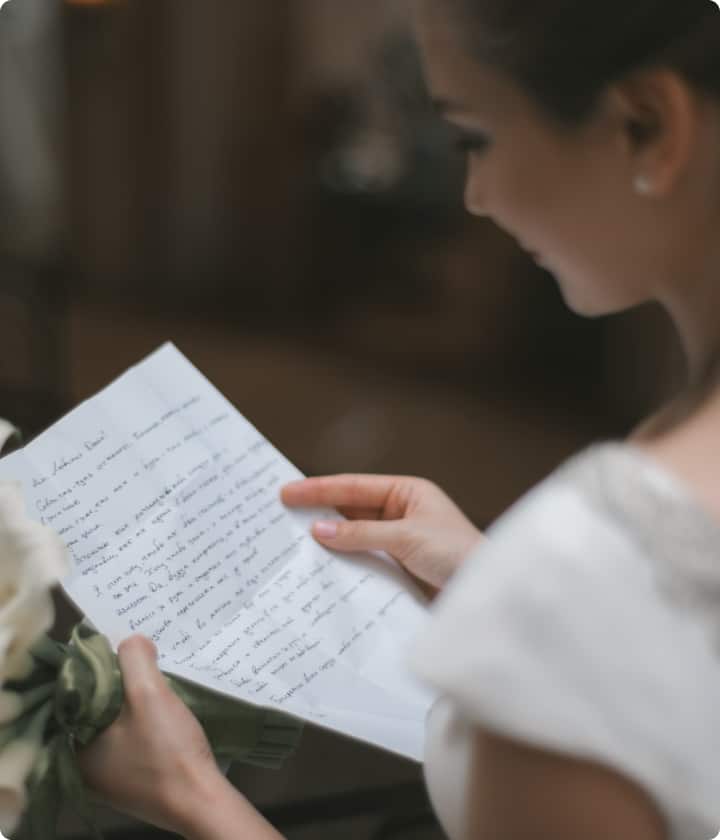
- Have the words with you. A printed copy or cue cards is fine. The trick is not to sound like you are reading. Think of how you talk to your friends in a bar when you are comfortable and confident. That is the delivery you want.
- One or two drinks, not more. Drunk speakers do not usually give their best. Cut loose after.
- Nerves are fine. Everyone gets them. Remember that today you have more goodwill from the audience than any speaker ever gets. It is your day, and everyone in the room wants you to shine. More on this in conquer the nerves.
Want it written for you?
You get one chance, and a matter of minutes, to say publicly what makes you love your husband and what today means to you. If you want help making the most of it, our speech writing service writes bride speeches for £299. We find out what makes the two of you tick, as individuals and as a couple, and write something in a voice that is authentically you, whether you want to pull at the heart strings, tickle the funny bone, or both.
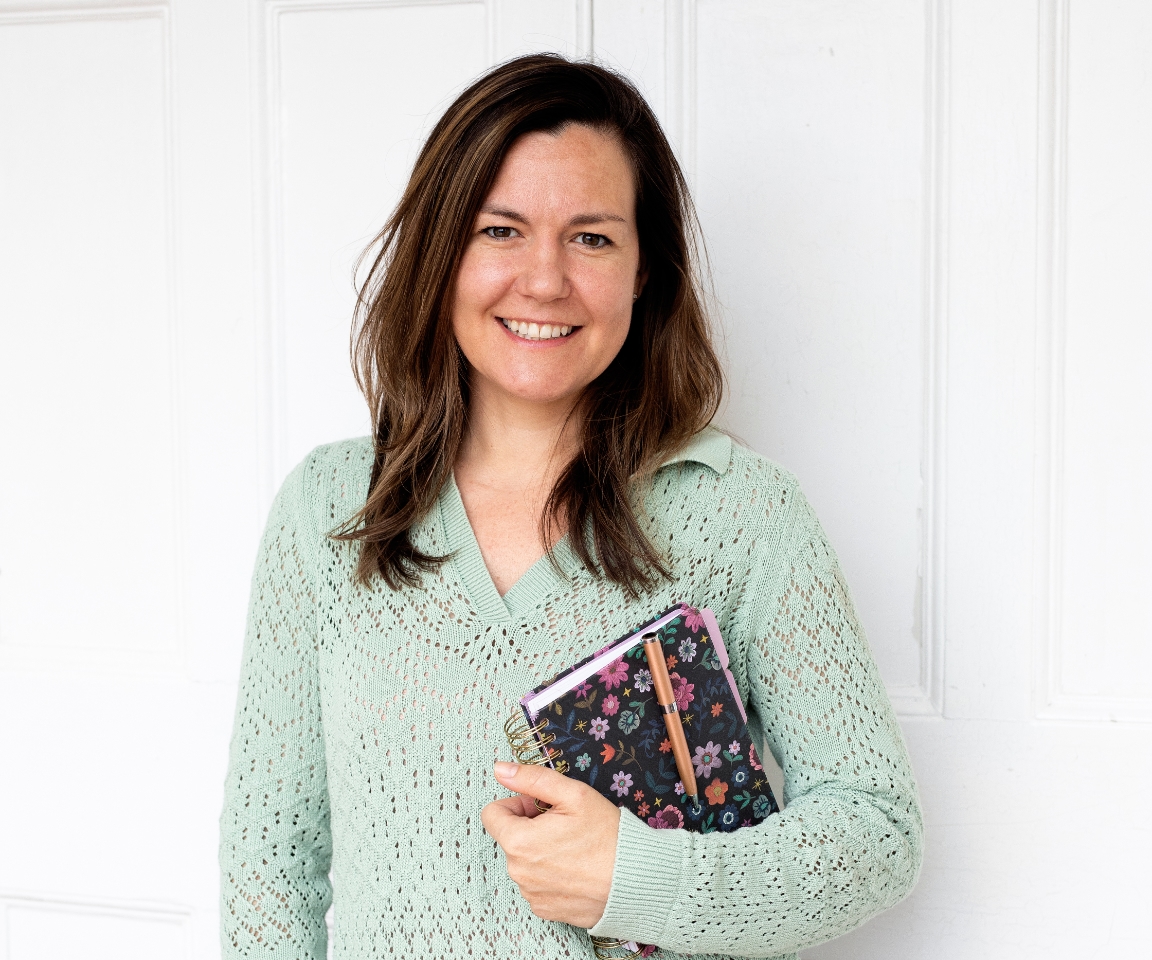 Your writer: Helene. Helene writes our speeches for women. In her words: “I love writing and I love weddings, so this is the perfect job for me. Beyond tradition, there’s no reason men should always be the ones to speak, and I’m delighted to be writing more and more wedding speeches for women.”
How it works
- Fill in a questionnaire. The basics, plus questions about you, the groom and the memorable moments you have shared.
- Have a call with your writer. A real human, the same one who writes your speech. An informal chat about your answers, early thoughts on structure, and agreed timings.
- Get your speech by the agreed date. You only pay once it is written. Amendments are part of the service right up to the big day, and if we cannot get it right, you get your money back.
If your dad is speaking too, our father of the bride speech guide will tell you what is coming, and the order of wedding speeches will help you decide where to slot yourself in. If you would rather spend the run-up to the wedding on anything other than a blank page, the speech writing service is there whenever you need it.
Frequently asked questions
Does the bride give a speech at a wedding?
Traditionally no, the speeches ran father of the bride, groom, best man. It is now increasingly common for the bride to speak, either instead of the groom, as well as him, or in a joint speech with him. It is entirely her choice.
How long should a bride speech be?
The usual advice is six to ten minutes, but how much good material you have matters more than a stopwatch. If you have plenty, eleven or twelve minutes is fine. If the groom is also speaking, keep the two speeches to fifteen or sixteen minutes combined.
What should a bride say in her speech?
Mostly talk about your new husband: what makes him right for you, how you met, a bit of affectionate fun and some real examples of why you love him. Thank your in-laws for welcoming you in, thank anyone the groom is not covering, and finish with a toast.
Should a bride speech be funny or sentimental?
Both, and there is definitely room for both. Much of it will be about your new husband and what you have shared, so the sentiment is built in. Any humour about the groom or the in-laws should be more laugh with than laugh at.
When does the bride speak in the order of speeches?
Usually somewhere in the middle, after the father of the bride and either before or after the groom. There is no fixed rule, so agree the order with the groom and best man beforehand and make sure you are not covering the same ground.